
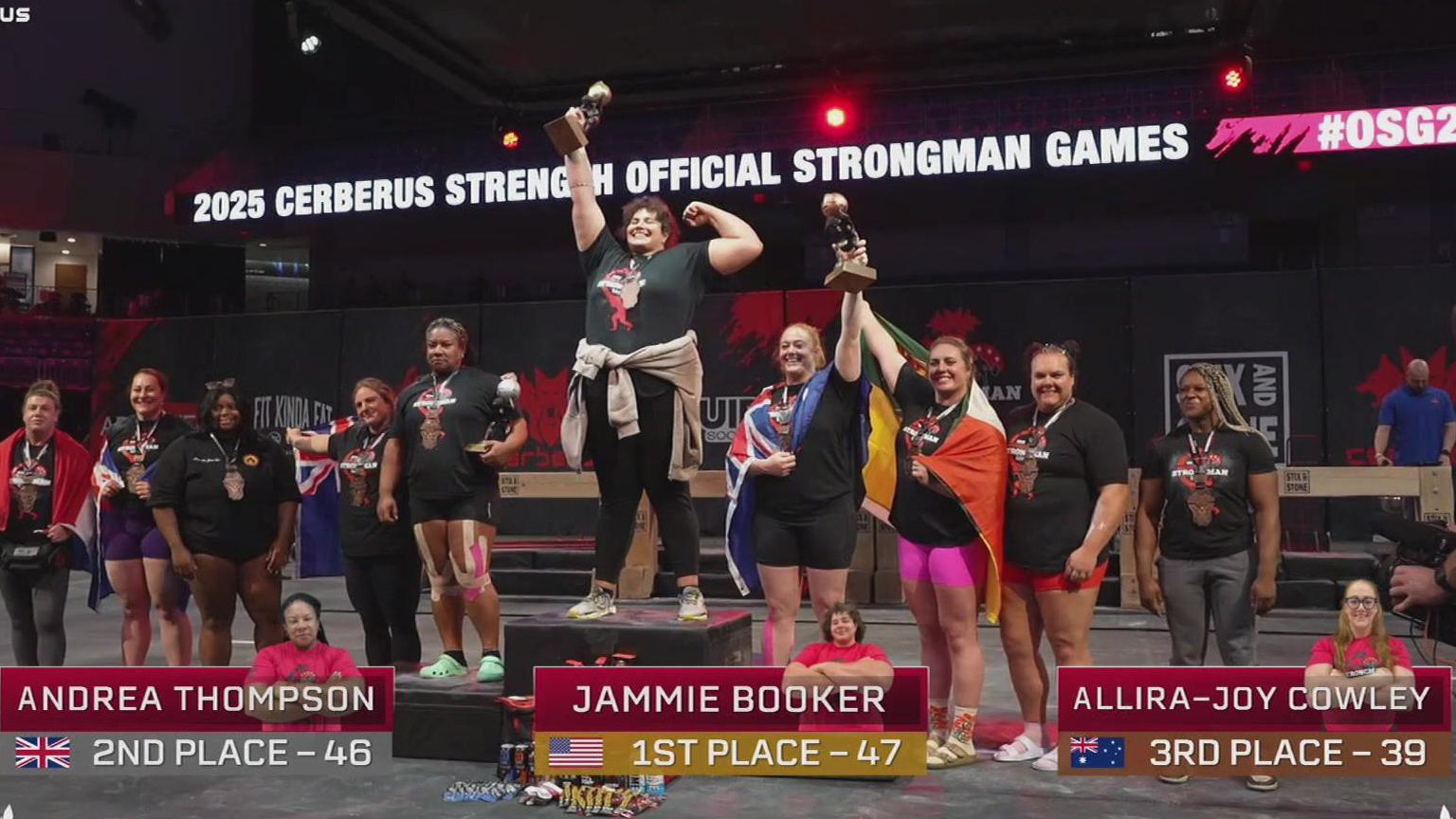
The American competitor was disqualified from the global female strength competition
A British competitor crowned the world's strongest woman claims she was robbed of her winning moment after it was revealed the initial winner was a transgender woman who was ineligible to compete.
The British strongwoman was awarded the title retrospectively after US competitor Jammie Booker was disqualified.
Thompson told athletic press the competition, held in the Texas city of Arlington, was overshadowed by an individual who wasn't eligible to participate.
"I felt very disappointed and upset with what she's done," she stated. "She lied and was very deceptive, and deprived a lot of things from a lot of female athletes.
"The competitor that finished 11th was denied the opportunity to compete in the final day... to have the top 10 status in the world."
Event coordinators, the strongman organization, stated "competitors could only compete in the category for their birth sex recorded at birth", and that they had eliminated the competitor in dispute "who was male by birth."
Competition Background
Records show Booker participated in at least two other strongwoman competitions this year - taking first place at the Rainier Classic in summer and placing runner-up at the continental championship in mid-summer.
Sports media could not reach Booker and the organization said "efforts had been made to get in touch with the competitor... but a response had not been received."
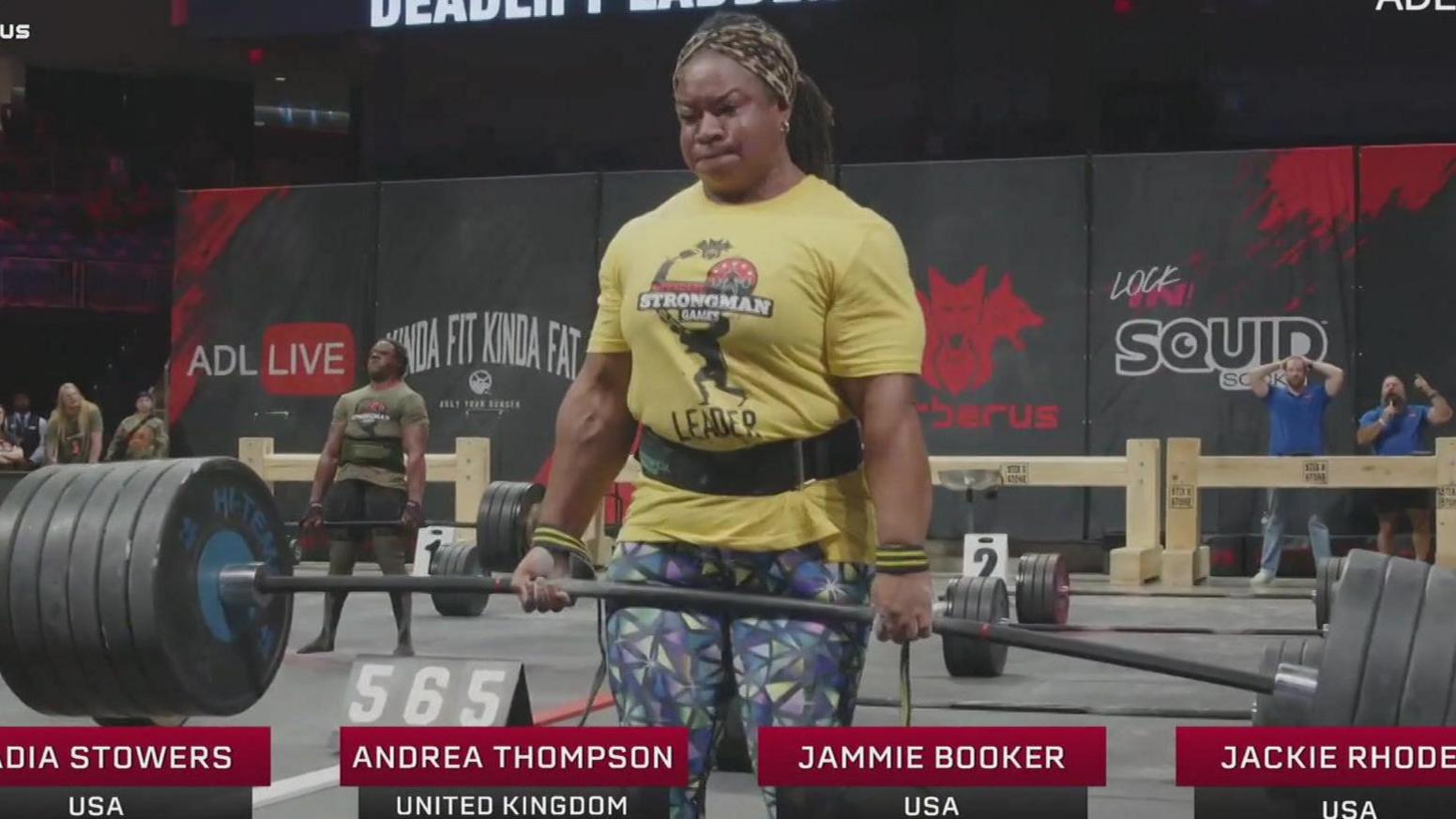
Thompson had initially placed second to the US competitor
The champion, forty-three, ultimately became the world's strongest woman for the second time, having previously won the championship in two thousand eighteen.
But it was only after this season's competition finished that she discovered her opponent had been ineligible to participate.
"There existed nothing at all during the event - no-one had any cause to question anything," said the parent from East Anglia.
"It was about several hours after that the first rumours started circulating, and then the officials contacted me.
"It's a massive accomplishment that's been overshadowed by some dishonesty."
Event Particulars
Power competitions have no single regulatory authority, instead, independent groups organize a range of competitions.
The Global Female Strength title is presented at the Official Strongman Games, organized by a British company.
Over 400 athletes from nearly forty countries took part in this season's event, which organisers describe as "among the highest points of the power sports community."
The Games featured events across various gender, body mass and years categories.
Thompson and the American competitor were in the Female Open division and competed in half-dozen events over multiple days, including the log press, timber frame carry and deadlift ladder.
Rules and Eligibility
An announcement from event officials said: "Competitors are placed to male or female divisions based on whether they are registered as man or female at birth.
"It appears that an competitor who is biologically male and who currently self-identifies as female competed in the Women's Open division... officials were unaware of this fact prior to the competition."
In 2023, Texas introduced a law banning "males by birth from participating with female athletes", although this only applies to higher education athletics in the region.
The champion thinks female strength events may implement gender verification in the future.
"I guess it's going to have to proceed along that route... but our discipline is still quite new. There's insufficient funding in it to have these things in place. We rely on the honesty of the competitors."
Wider Athletic Landscape
In recent years, a growing quantity of sports federations have prohibited competitors who have experienced puberty as males from participating in top-level women's events, amid apprehensions over fairness and safety, including global aquatics and track and field organizations.
In May, prominent UK sports bodies were among a group of associations to follow suit, after the UK Supreme Court's decision that the legal definition of a woman is based on birth sex.
The moves have been challenged by transgender advocacy campaigners, who contend they could infringe upon individual freedoms and maintain inclusion should be prioritised.
Both global track and field and pugilism bodies introduced genetic sex screening this year, claiming it is necessary to protect the integrity of female sports.
An official from international athletics has stated that between 50 and 60 athletes who experienced puberty as males have been top placers in the female category in global and continental athletics championships since 2000.


