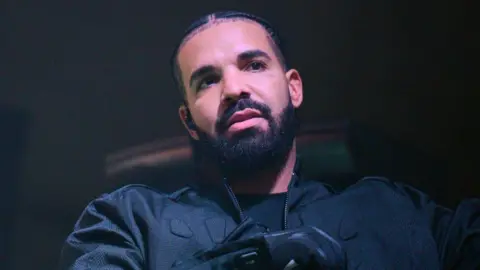
A judge has thrown out Drake's defamation lawsuit targeting the music corporation over Kendrick Lamar’s track Not Like Us.
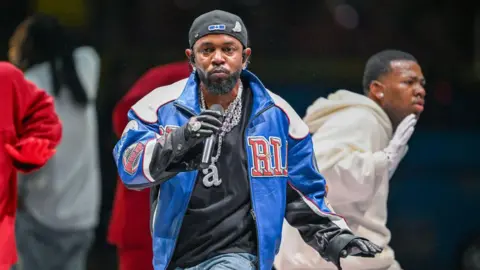
Presiding Judge Jeannette Vargas ruled that Lamar's song lyrics, which claimed Drake and his crew of being "pedophiles", were "protected opinion" and cannot be deemed defamatory.
The Canadian rapper filed the lawsuit in January, claiming UMG, the record label representing both artists, of defamatory conduct by permitting the track to be released and marketed, saying it spread a "false and malicious narrative".
The artist’s representative said he intended to appeal the decision. UMG said it was satisfied with the outcome and was looking forward to resuming its collaboration with the musician.
Background of the Rap Battle
Not Like Us, which was first dropped in spring 2024, was widely seen as the decisive blow in an ongoing battle between the rival rappers.
It has emerged as the most successful track of the rapper’s career, having won five Grammys and being one of the most-discussed highlights of his Super Bowl performance in February.
In a 38-page order, the judge called the dispute between the rappers "the most notorious hip-hop feud in the genre's history".
"Both rappers’ seven-track rap battle was a 'verbal conflict' that was the focus of extensive press coverage and digital debate," the court wrote.
"While the claim that plaintiff is a child predator is certainly a serious one, the broader context of a heated rap battle, with incendiary language and offensive accusations exchanged by both participants, would not lead the average audience to believe that 'Not Like Us' imparts verifiable facts about plaintiff."
She also noted that, in an earlier song, the artist had "dared Lamar to make the paedophilia accusations" that featured in the diss record.
On the song Taylor Made Freestyle, Drake used the AI-generated voice of Tupac Shakur to suggest strategies on how to win the rap battle.
"Suggest he has a preference for minors, consider that a tip," the track proposed.
"It is in this context in which such lines as 'Hey Drake, I’ve heard you prefer them young' must be assessed," stated Judge Vargas.
"The similarity in the wording suggests strongly that this line is a direct callback to the artist’s own words in the earlier release."
'A Slap in the Face to Creatives'
The musician, whose legal name is Aubrey Drake Graham, did not sue Lamar in the legal filing.
His legal team alleged UMG of launching "an effort to create a popular song" out of a track that made the "false factual allegation that the artist is a convicted predator, and to suggest that the audience should turn to extra-legal action in retaliation".
Ruling against Drake, the judge said listeners would not expect "truthful accounts" from a diss track "replete with profanity, insults, violent implications, and exaggerated statements."
She pointed out that the rapper himself had engaged in comparable rhetoric, referencing a line in which the artist "strongly" suggested that "Lamar is a spouse beater", and a separate instance where Drake "claims that he 'heard' that one of his rival’s children may not be his biological offspring."
Concerning Lamar's song, Judge Vargas said: "Although seemingly factual claims may assume the character of subjective views... when made in public debate, intense arguments, or other circumstances in which an listener may expect the use of epithets, fiery rhetoric or hyperbole."
Responding to the rejection, a label spokesperson said: "From the beginning, this case was an insult to all artists and their artistic freedom and should not have seen the light of day."
"We're pleased with the court's dismissal and are eager to continuing our work successfully promoting the artist’s work and supporting his career," the spokesperson added.
A representative for the musician said the rapper planned to contest the ruling, "and we look forward to the Court of Appeals reviewing it".
Kendrick Lamar has yet to comment on the case.


