
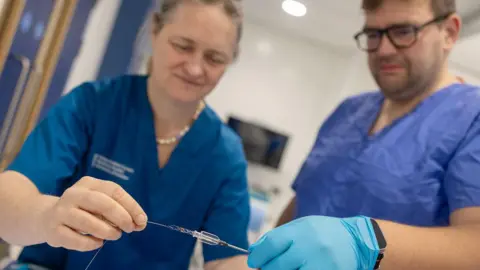
Doctors from Scotland and the United States have accomplished what is considered a world-first stroke procedure utilizing automated systems.
The medical expert, working at a medical institution, conducted the distant clot removal - the elimination of vascular blockages post a brain attack - on a donated body that had been contributed to medicine.
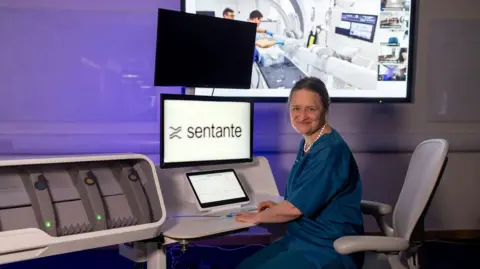
The expert was working from a medical facility in Dundee, while the body she was operating on with the device was across the city at the academic institution.
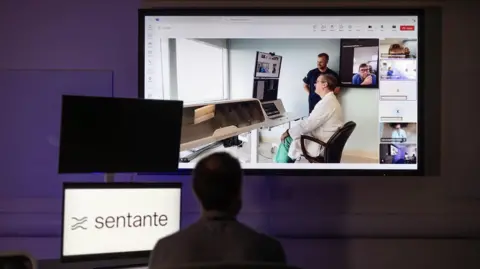
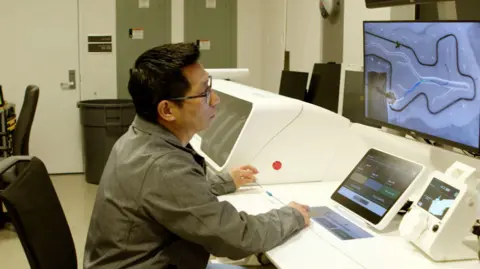
Hours later, a neurosurgeon from Florida used the equipment to conduct the initial intercontinental procedure from his Jacksonville base on a medical specimen in Scotland over 4,000 miles away.
The research collective has called it a potential "game changer" if it gains clearance for clinical application.
The medics consider this system could transform cerebral healthcare, as a limited availability of specialist treatment can have a significant effect on the recovery prospects.
"It seemed like we were seeing the early preview of the future," stated the medical expert.
"While in the past this was regarded as theoretical concept, we proved that all stages of the operation can now be performed."
The Scottish institution is the worldwide teaching facility of the World Federation for Interventional Stroke Treatment, and is the sole location in the Britain where medical professionals can operate on medical specimens with actual blood circulated in the vessels to mimic treatment on a living person.
"This represented the pioneering moment that we could conduct the whole mechanical thrombectomy procedure in a real human body to prove that every phase of the procedure are possible," said Prof Grunwald.
A healthcare leader, the director of a health foundation, described the intercontinental surgery as "an extraordinary advancement".
"During many years, people living in isolated regions have been denied availability to surgical intervention," she continued.
"Robotics like this could address the disparity which persists in brain care throughout Britain."
How does the technology work?
An blockage stroke occurs when an vascular pathway is clogged by a blockage.
This interrupts blood and oxygen supply to the neural matter, and brain cells stop functioning and deteriorate.
The superior intervention is a thrombectomy, where a surgeon uses medical instruments to clear the obstruction.
But what transpires when a individual cannot access a professional who can conduct the operation?
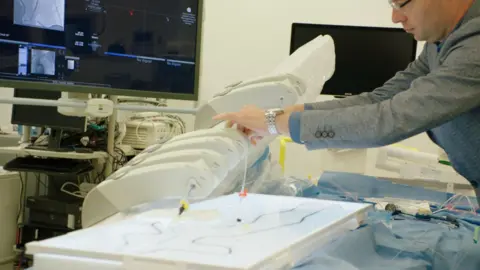
The medical expert explained the experiment demonstrated a robot could be attached to the identical medical instruments a doctor would normally use, and a medic who is present with the individual could readily join the tools.
The expert, in a separate site, could then hold and move their personal instruments, and the mechanical device then carries out precisely identical actions in live timing on the individual to conduct the surgical procedure.
The individual would be in a treatment center, while the doctor could carry out the operation with the automated equipment from any place - even their personal residence.
The lead researcher and Ricardo Hanel could view real-time imaging of the body in the trials, and monitor progress in live conditions, with the Scottish specialist explaining it took just a brief period of training.
Tech giants leading tech firms were participated in the research to secure the network connection of the automated system.
"To perform surgery from the America to Britain with a minimal delay - a blink of an eye - is truly remarkable," commented the neurosurgeon.
Innovations in cerebral healthcare
The medical expert, who has won an award for her contributions and is also the vice president of the World Federation for Interventional Stroke Treatment, stated there were two main problems with a conventional clot removal - a worldwide deficiency of specialists who can perform it, and treatment depends on your physical place.
In the region, there are just three locations people can receive the procedure - three major cities. If you reside elsewhere, you must travel.
"The intervention is very time sensitive," explained Prof Grunwald.
"Every six minutes delay, you have a 1% less chance of having a positive result.
"This system would now offer a novel approach where you're not reliant upon where you dwell - conserving the crucial moments where your cerebral matter is degenerating."
Medical statistics indicated there were {9,625 ischaemic strokes|numerous cerebral events|
